

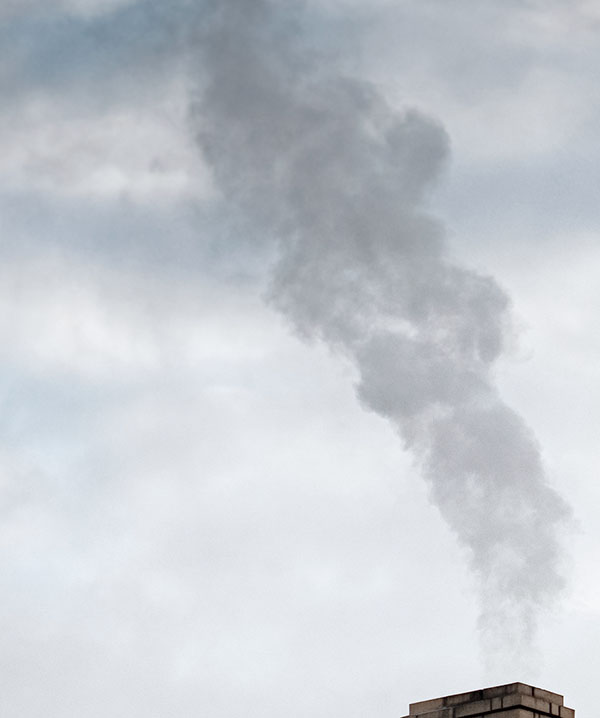
Wood smoke and particle pollution
Burning wood creates significant amounts of particle pollution. And the more scientists have learned about particle pollution, the more alarmed they’ve become.
Scientific studies have now linked particle pollution with a litany of health problems that include asthma attacks, diminished lung function, respiratory ailments, heart attacks, and stroke.
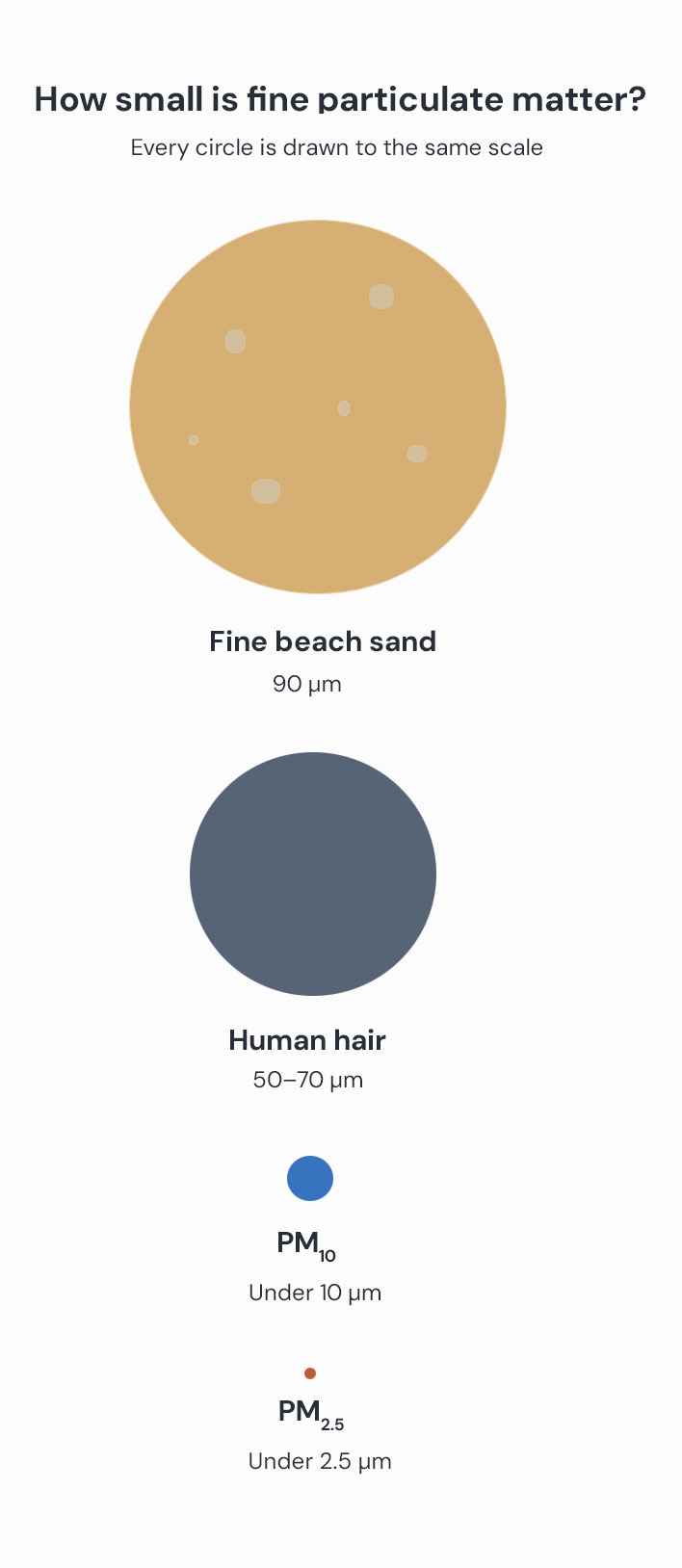
The most hazardous particles from wood burning are smaller in diameter than a human hair. These fine particles are too small to be filtered out by the nose and upper respiratory system, so they end up deep in the lungs. Shutting the windows and doors of your home will not protect you from fine particle pollution—the particles are so small that they will infiltrate even the best quality double-paned windows and doors.
Both chronic and short-term exposure to particle pollution have been linked to increased hospital admissions and emergency room visits—and even to premature death from heart or lung diseases. Epidemiologic studies indicate that tens of thousands of excess deaths per year, and many more cases of illness, result from exposure to PM2.5.
In the United States, more primary PM2.5 is emitted from residential wood heating than from motor vehicles.
Wood smoke and particle pollution references